
Most shounen heroes want to become the strongest. Tanjiro Kamado wants his sister to be human again and would honestly rather hurt nobody on the way, which is an odd engine for a series famous for its sword fights. It starts with him walking home through snow to find his family dead and Nezuko turned into the thing that killed them. Everything the series does afterwards, the water-and-flame fight animation, the demons who get a sad flashback the moment they die, the boy who apologises to monsters while cutting their heads off, grows out of that first cold walk. So the question for your next show is which part of it you want back.
If it was the spectacle, there is one obvious answer and it is first below. If it was the Taisho-era setting and the sense that the demons belong to Japanese folklore, the second pick is older and stranger and better than its reputation. If it was Tanjiro himself, the boy who keeps asking whether he really has to kill, the fourth pick is the one to watch. Demon Slayer’s first season is 26 episodes; the story then continues through four shorter arcs and the Infinity Castle films, so if you are not finished with it yet, the seasons guide explains that structure.
Jujutsu Kaisen for the fights

- 24-episode first season
- the film Jujutsu Kaisen 0 and two more seasons continue it
- story ongoing
The same magazine, the same decade, and a fight animation budget to match ufotable's. Colder in the heart than Demon Slayer, sharper in the mouth.
Explore animeYuji Itadori swallows a cursed finger to save a friend and spends the rest of the series hosting the most dangerous demon in the world inside his own body. The set-up rhymes with Nezuko’s: a decent teenager living beside something monstrous, trying to keep it useful. The fights are the draw. MAPPA’s choreography in the first season, especially the detention-centre fight in the first arc, has the same “how did they animate that” quality as Tanjiro’s water breathing, but with more hand-to-hand grit and less painterly flourish.
Where it differs is warmth. Demon Slayer keeps finding the human inside each demon; Jujutsu Kaisen mostly does not bother, and its adult mentor, Gojo, is a smug genius rather than a stern uncle. The humour is drier, the deaths hit harder, and the second season is one of the bleakest stretches of mainstream shounen in years. Content note: graphic dismemberment and a body count that includes people you like. Our Jujutsu Kaisen guide is the next stop if this one lands.
Dororo for demons in old Japan

- 24 episodes
- the story concludes
A samurai lord sells his unborn son to demons. The boy grows up and comes to take his body back, one demon at a time.
Explore animeHyakkimaru was born without eyes, ears, skin, or limbs because his father traded them for power. Fitted with prosthetics and blades hidden in his arms, he wanders a war-torn Japan killing the demons who hold each piece of him, and every kill returns something: first sensation, then sound, then a voice. The small thief Dororo who tags along becomes the sibling relationship at the centre of the show, and it is the closest thing on this list to Tanjiro and Nezuko.
It is also grimmer. The 2019 version, made by MAPPA and Tezuka Productions, keeps Osamu Tezuka’s original premise and follows it to a hard, satisfying finish in 24 episodes, which is a rarer thing than it should be. Expect period cruelty, child soldiers, and demons that look like something from a temple scroll rather than a video game. If Demon Slayer’s “demon with a tragic past” episodes were the ones that stayed with you, this is where that idea comes from.
Chainsaw Man for the monsters

- 12-episode first season
- the Reze Arc film (2025) continues it
- story ongoing
Devils born from fear, a boy who wants a normal breakfast, and fights that end in ways no other shounen would allow.
Explore animeDenji is a teenager so poor he sells organs to pay his dead father’s debt, and when he merges with a chainsaw devil his ambitions rise all the way to “toast with jam”. The devils are the reason to watch: the Eternity Devil that turns a hotel floor into an infinite loop, the Gun Devil described only by its casualty figures, the Bat Devil that arrives like a weather event. Demon Slayer’s Twelve Kizuki have personalities; Chainsaw Man’s devils have concepts, and the show mines dread from the gap between the two.
Tonally it is a different animal. There is no Tanjiro figure. Denji is crude and honest about it, the adults are worse, and the comedy comes from how little anyone pretends to be noble. MAPPA’s first season is deliberately cinematic and quiet between the violence, which some viewers found slow. Content note: heavy gore and sexual content played for both laughs and discomfort. If you want the monster spectacle without the cruelty, skip to Mob Psycho below.
Demon Slayer's secret is less the swordplay than a hero who would rather put the sword down.
Mob Psycho 100 for the kind hero

- 37 episodes across three seasons (12 + 13 + 12)
- complete
The most powerful psychic alive is a shy schoolboy who refuses to use his power on people. Spectacular when he finally has to.
Explore animeShigeo “Mob” Kageyama could level a building with a thought and would much rather join the bodybuilding club and get better at talking to girls. His mentor, Reigen, is a con man who cannot see spirits at all and gives Mob the most useful advice in the show anyway. The exorcism fights are wild, rubbery, and gorgeous, but the series keeps insisting that winning them is not the point, which is exactly the argument Demon Slayer makes every time Tanjiro grieves for a demon.
The art style is the hurdle. Studio Bones animates it in a loose, elastic, sometimes scribbly way that looks cheap in a still frame and astonishing in motion; give it two episodes. Unlike everything else on this list, the anime finishes the story, and the third season’s ending is one of the best-earned in the genre. Content note: some bullying and a cult arc that gets unsettling, but no gore to speak of. There is a full Mob Psycho guide if you want more in that direction.
More, briefly

- 13-episode first season
- a 12-episode second season aired in 2026
- story continues
A condemned ninja and his executioner are sent to a paradise island that turns people into flowers. Edo-period setting, MAPPA fights, and a lead who just wants to go home to his wife.
Explore animeGabimaru the Hollow was the deadliest ninja in his village until marriage made him want a quiet life; now he is on death row, and the only way home is an elixir on an island nobody returns from. His executioner, Sagiri, comes from a family of beheaders and doubts the job. The island’s creatures, with serene Buddha faces on insect and flower bodies, are the nearest thing here to Demon Slayer’s demon design. Content note: nudity and body horror.

- Two 12-episode seasons
- story continues
A girl who believes in ghosts and a boy who believes in aliens are both right. Science Saru's animation is as expressive as ufotable's is polished, and the two leads are the best pairing here.
Explore animeWhere Demon Slayer’s demons are mournful, Dandadan’s spirits are loud, crude and occasionally devastating. Momo and Okarun spend most episodes arguing while something enormous tries to kill them, and the seventh episode, the story of a spirit called Acrobatic Silky, can match any Demon Slayer death flashback for tears. Two seasons of 12 episodes, and the story continues. Content note: sexual threat against Momo early on, played for tension.
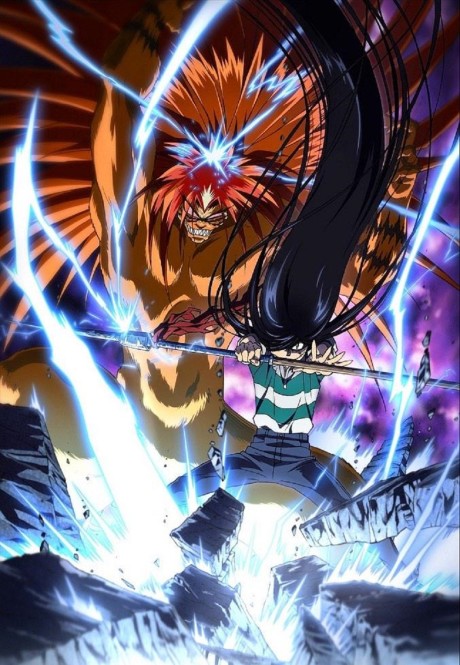
- 26 + 13 episodes
- complete
A boy frees a tiger demon pinned under his family's temple by a cursed spear and the two spend the series failing to kill each other. The 1990s manga adapted properly, with an ending.
Explore animeUshio Aotsuki pulls the Beast Spear out of a tiger demon who has been pinned in his family temple’s cellar for five hundred years, and the freed monster, whom Ushio names Tora, promises to eat him at the first chance. He never quite gets round to it. A boy and an unwilling monster ally is Tanjiro and Nezuko turned inside out. Thirty-nine episodes squeeze in a long manga, so the pace is relentless, but they reach its real ending.

- 24 episodes, then the 23-episode Kyoto Disturbance
- continues
A former assassin in Meiji Japan wields a reverse-blade sword so he never takes another life. If Tanjiro's refusal to enjoy killing meant something to you, Kenshin is its direct ancestor.
Explore animeKenshin Himura was once the Battousai, the assassin whose sword helped end the shogunate, and ten years later he wanders with a sakabato, a blade whose sharp edge faces him. He falls in with Kaoru, who runs a struggling kendo school, and a household gathers round them. The fights are duels between named swordsmen with recognisable styles, which is Demon Slayer’s breathing techniques in a more historical key. The 2023 remake from Liden Films is the cleaner place to start than the 1996 series.
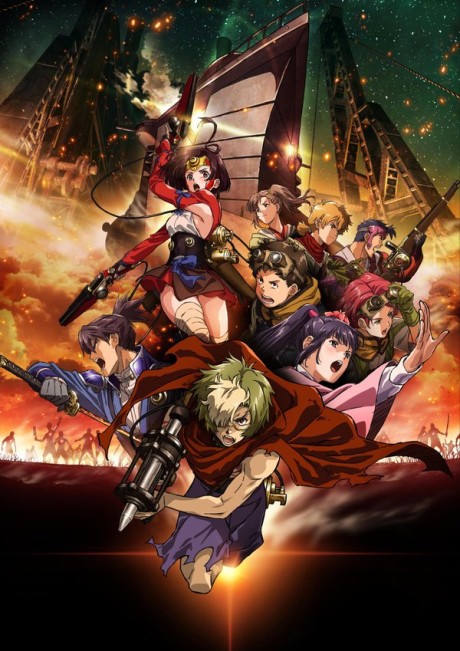
- 12 episodes, then The Battle of Unato film
- that story concludes
Armoured trains cross a Japan overrun by the undead. Made by Attack on Titan's director with a similar appetite for scale; the plot loses its nerve late, the set pieces do not.
Explore animeIkoma is a steamsmith who builds a gun to kill the Kabane, undead creatures whose hearts are caged in iron, gets bitten, and survives as something between human and monster. Mumei, a girl who already lives in that in-between state, fights beside him on an armoured train that has to keep moving between fortress stations. Hiroyuki Sawano’s score plays at full volume throughout, and the first half is a brilliant siege story. Content note: frequent gore and the killing of infected civilians.
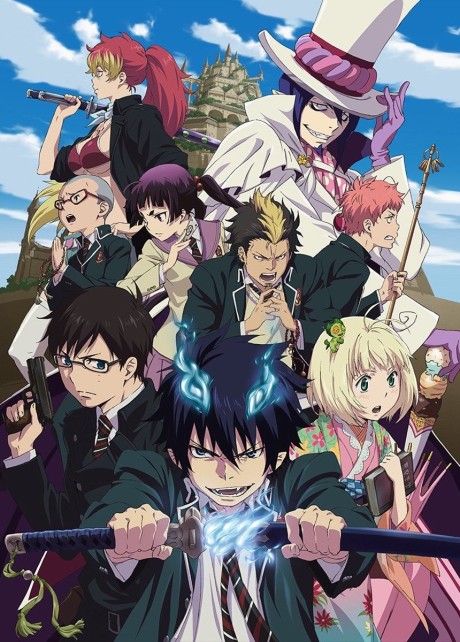
- 25-episode first season with an anime-only ending
- later seasons follow the manga from Kyoto Saga
The son of Satan enrols at an exorcist academy to fight his father. Warmer and sillier than Demon Slayer; skip the first season's last few episodes if you plan to continue.
Explore animeRin Okumura has blue flames he cannot fully control, and the priest who raised him dies protecting him within the first two episodes. The family grief and the demon blood are the Demon Slayer echoes: a boy carrying something monstrous and trying to prove to the people hunting demons that he is on their side. He is louder and funnier than Tanjiro, and the later seasons, from Kyoto Saga onwards, are the stronger run.

- 26 episodes, then The Next Passage
- episodic, no cliffhanger
A wandering healer treats people afflicted by mushi, spirits that live in the gap between plant and ghost. No swords at all. For viewers who loved the quiet, sad demon episodes more than the arcs.
Explore animeEach episode follows Ginko into a mountain village where a mushi is causing something odd, a whole community slowly going deaf, a swamp that travels, and he tries to treat it without killing anything. Artland paints the countryside with the same care Demon Slayer gives Tanjiro’s home before the snow. If the gentle stretches between fights were your favourite parts, this is the patient cousin.
At a glance
| What you loved | Start with | Commitment | Does it finish? |
|---|---|---|---|
| The fight animation | Jujutsu Kaisen | 24 episodes to start | No, ongoing |
| Demons from folklore, old Japan | Dororo (2019) | 24 episodes | Yes |
| Monster design and dread | Chainsaw Man | 12 episodes plus a film | No, ongoing |
| A hero who hates violence | Mob Psycho 100 | 37 episodes | Yes |
| A boy and his monster | Ushio and Tora | 39 episodes | Yes |
| Quiet, sad spirit stories | Mushishi | 26 episodes | Episodic |
For more candidates ranked by shared tags, open the Finder with Demon Slayer selected and read the reason beside each card before trusting the percentage. If you are new to anime entirely and Demon Slayer was your first, the where to start guide covers the other genres worth a look.
Sources and review
Factual references for this guide are listed below. Recommendation comparisons are Fantera’s editorial interpretation. See how we research and review articles.
Catalogue entries
Episode counts, years, and studios come from Fantera’s AniList-derived catalogue.
- Demon Slayer: Kimetsu no Yaiba (26 eps · 2019) · AniList
- JUJUTSU KAISEN (24 eps · 2020) · AniList
- Dororo (24 eps · 2019) · AniList
- Chainsaw Man (12 eps · 2022) · AniList
- Mob Psycho 100 (12 eps · 2016) · AniList
- Hell’s Paradise (13 eps · 2023) · AniList
- DAN DA DAN (12 eps · 2024) · AniList
- Ushio and Tora (TV) (26 eps · 2015) · AniList
- Rurouni Kenshin (2023) (24 eps · 2023) · AniList
- Kabaneri of the Iron Fortress (12 eps · 2016) · AniList
- Blue Exorcist (25 eps · 2011) · AniList
- MUSHI-SHI (26 eps · 2005) · AniList
Published . Reviewed .