
Watch Chainsaw Man next. It runs in the same magazine, it was animated by the same studio, and it takes Jujutsu Kaisen’s habit of killing characters you assumed were safe and makes it the whole design. If you have already seen it, or if what you actually loved about JJK was the rules of cursed energy, the ensemble, or Gojo being unbearable, the list below splits those apart.
One warning before any of it. Jujutsu Kaisen’s own story is still being told, and it is easy to run out of it in the wrong order. Check the path below first.
First, make sure you have finished it
- Season 124 episodes. Yuji, Megumi, Nobara, the Kyoto exchange event.
- Jujutsu Kaisen 0The film. A prequel about Yuta that the second season assumes you have seen.
- Season 223 episodes. Gojo's past, then the Shibuya Incident.
- Season 3The Culling Game Part 1, 12 episodes, aired in 2026. The story continues past it.
Chainsaw Man

- 12-episode first season
- the Reze Arc film (2025) continues it
- story ongoing
Devils instead of curses, a hero with no ambition beyond a warm meal, and a first season shot like a film.
Explore animeDenji’s deal is simpler than Yuji’s: his dog is a chainsaw devil, they merge, and now he works for a government devil-hunting office in exchange for food and a bed. The devils are born from what people fear (guns, bats, eternity, the future), which gives the show the same pleasure JJK gets from curses shaped by human misery, except Chainsaw Man pushes every idea further and stops explaining sooner.
The tone will decide whether you love it. There is no Nobara-and-Yuji warmth; Denji’s colleagues are damaged people using him, and the show knows it. MAPPA’s direction favours long quiet takes and real-world lighting, which makes the violence land harder when it comes. Content note: graphic gore, and sex used as both joke and threat. If the Shibuya arc was your favourite part of JJK, this is your show. If the Kyoto exchange event was, go to Mob Psycho.
Makima, the calm woman from the Public Safety office who recruits Denji, is the most unsettling character in either series, and the show makes you wait a long time to understand what she wants. Power, a blood fiend who lies constantly, and Aki, a devil hunter with a grudge, fill the flat Denji ends up sharing, and their domestic scenes are where the show does its best comedy. The Reze Arc film follows directly on from episode 12, so watch it before anything else on this page.
Mob Psycho 100

- 37 episodes across three seasons (12 + 13 + 12)
- complete
Spirits, a psychic schoolboy who refuses to use his power in anger, and a con-man mentor who is somehow the moral centre.
Explore animeWhere Jujutsu Kaisen’s sorcerers treat curses as a job, Mob’s exorcisms keep asking who the ghost was. Mob himself is the anti-Yuji: a quiet, awkward boy whose emotions are measured on a percentage counter in the corner of the screen, and when it hits 100 the fight animation goes somewhere JJK never quite does, rubbery and abstract and joyous. Reigen, the fraud who employs him, is the mentor Gojo pretends to be, and his speech in the second season’s finale is the best scene in the genre.
The catch is the drawing. Bones animates the manga’s scribbly style faithfully and the first episode looks rough if you are coming straight from MAPPA’s polish. Stick with it. The series ends, properly, in its third season, which none of the other four deep picks here can claim. There is even a Sukuna of sorts: Dimple, a small green spirit who tries to use Mob early in the first season and ends up as a sarcastic lodger, plays the voice-in-your-ear role as comedy rather than threat. Content note: bullying, one cult arc that turns nasty, almost no blood. Our Mob Psycho guide goes further in this direction.
Jujutsu Kaisen borrowed its rules from Hunter x Hunter and its cruelty from Chainsaw Man. Both are worth going back to the source for.
Hunter x Hunter (2011)

- 148 episodes
- adapts the manga up to its long hiatus
- the arcs it covers conclude
Nen is cursed energy with the serial numbers still on. Gege Akutami has named Yoshihiro Togashi as an influence, and it shows.
Explore animeCursed techniques, binding vows, the idea that a limitation you impose on yourself makes your power stronger: all of that is Nen, the system Yoshihiro Togashi built for Hunter x Hunter, and JJK’s author has been open about the debt. Watching the original is like reading the manual. It is also a very different show in mood, a bright adventure about a boy looking for his father that slowly, over a hundred episodes, becomes something much darker.
Gon and Killua are the reason to get through the early stretch. Gon is a cheerful kid from an island who takes everything at face value; Killua is the son of a family of professional assassins who has never had a friend and is not sure what to do with one. Their partnership carries the series the way Yuji and Megumi carry JJK’s first season, and the show tests it harder than JJK tests anyone.
The commitment is real. The first 26 episodes are a tournament and an exam, and the series does not show its hand until the Yorknew City arc around episode 40. The Chimera Ant arc that follows, roughly 60 episodes, is the reason people rank this among the best shounen ever made, and it earns the comparison to JJK’s Shibuya. Content note: the Chimera Ant arc includes body horror and violence against children. The Madhouse animation is clean rather than spectacular; nobody watches it for sakuga.
Hell's Paradise

- 13-episode first season
- a 12-episode second season aired in 2026
- story continues
Death-row convicts sent to find the elixir of life on an island where the flowers are made of people. MAPPA again, and it shows.
Explore animeGabimaru is an assassin who has stopped caring whether he lives until he is offered a pardon: bring back the elixir of immortality from a paradise island, escorted by an executioner who is supposed to kill him if he runs. The island is the star. Its creatures are serene, androgynous, and horrifying, and the show’s best trick is that the more beautiful something looks, the worse it will do to you. The manga ran on Shonen Jump+, the digital sibling of the magazine that published JJK, and MAPPA adapted it in the same busy years, so it feels like a relative.
It is slower to reveal its rules than JJK and more interested in bodies than techniques. The pairing of Gabimaru and Sagiri, the executioner, gives it a warmth JJK saves for its side characters. Sagiri is the better character: a swordswoman from a family of professional beheaders, unsure she has the right to judge anyone, and the show’s argument about whether killing makes you strong or empty runs through her. The second season carries the island story on, and the manga has finished, so there is an ending waiting. Content note: dismemberment, some nudity, and a lot of flowers growing out of places flowers should not grow.
More, briefly
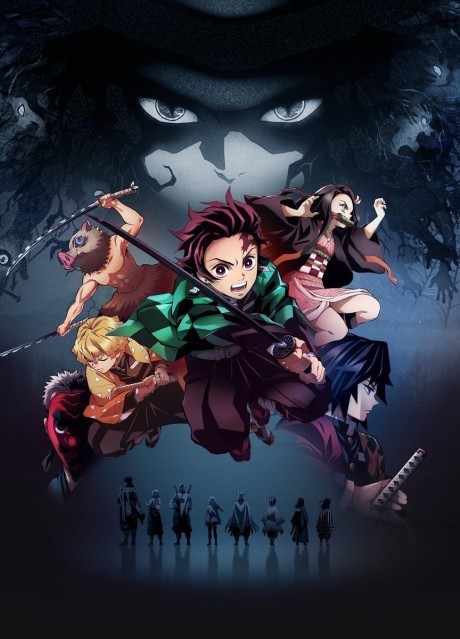
- 26-episode first season
- four shorter arcs and the Infinity Castle films continue it
Swords instead of techniques, Taisho Japan instead of Tokyo, and a hero who apologises to the demons he kills. Prettier and kinder than JJK.
Explore animeIf JJK’s fights are what you rewind, Demon Slayer’s are the other benchmark. ufotable animates Tanjiro’s water-breathing forms as if woodblock prints had learned to move, and episode 19 of the first season is where most doubters give in. The trade is emotional temperature: nearly every demon gets a flashback and a moment of mercy as it dies, which JJK’s curses almost never receive. The first season’s early episodes are slower than anything in JJK. There is a full Demon Slayer guide if it lands.

- Two 12-episode seasons
- story continues
A girl who believes in spirits and a boy who believes in aliens discover both exist and both want something from them. Science Saru's animation is as inventive as MAPPA's is muscular, and it is funnier than JJK has ever been.
Explore animeMomo Ayase and Ken Takakura, whom she nicknames Okarun, spend the first episode proving each other wrong in the worst possible way, and their bickering moves even faster than their fights. The spirits have ugly, specific rules, the way JJK’s curses do, and Science Saru throws everything at them, including a granny ghost who chases Okarun at motorway speed. The seventh episode, the backstory of a spirit called Acrobatic Silky, is the one people remember. Content note: sexual threat against Momo in the opening episodes.
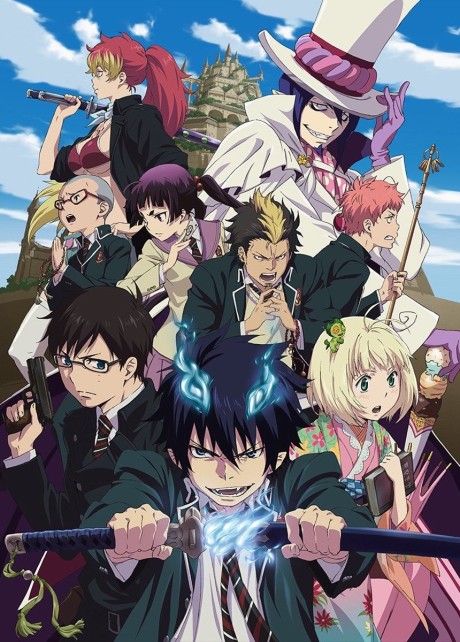
- 25-episode first season with an anime-only ending
- later seasons follow the manga from Kyoto Saga
Satan's son enrols at an exorcist academy. It has the school-and-mentor structure of JJK's first season without the body count. The first season's final stretch goes off-book; the Kyoto Saga is the better continuation.
Explore animeRin Okumura finds out he is Satan’s son when demons come for him, and the priest who raised him pays for it. He enrols at True Cross Academy to become an exorcist, only to discover that his twin brother Yukio is already one and is teaching his class. The classmates, the missions and a mentor with secrets follow the same shape as JJK’s first season at Jujutsu High, with brighter colours and far fewer deaths. The later seasons, starting with Kyoto Saga, are the stronger run.
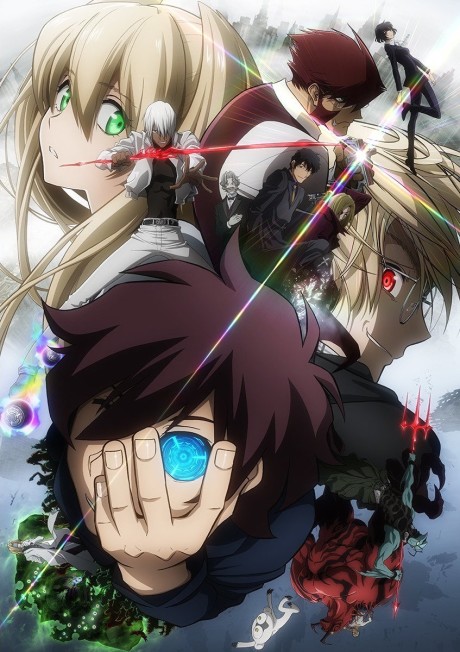
- 12 episodes, then the 12-episode sequel Beyond
- episodic, satisfying stopping points
New York has merged with the demon world and a team of superpowered oddballs keeps it from falling apart. Bones at its most stylish, and Leo is a gentler Yuji.
Explore animeLeonardo Watch is a photographer with no fighting ability whose eyes, a gift that cost his sister her sight, can see through any illusion. That makes him useful to Libra, a secret society of well-dressed monster brawlers led by the gentle giant Klaus. Most episodes are self-contained cases in Hellsalem’s Lot, the city New York became, and the first season also threads its own anime-only storyline through them. It is the pick if you liked JJK best when its sorcerers were showing off.

- 24 episodes
- a full arc concludes
- story continues
A man who cannot die teams up with a girl whose touch causes disasters. The power system is built from negated concepts (Unluck, Undead, Unjustice) and it is the closest thing to JJK's tactical fights on this list.
Explore animeFuuko Izumo has avoided touching anyone for years, because skin contact brings freak bad luck down on whoever she touches. Andy is an immortal who wants someone to kill him, and to him she looks like a solution. They end up in the Union, a round table of people with rule-bending powers who take missions from a book that rewrites the universe. Each power is a clear rule, and the fun is watching someone find the exploit, which is JJK’s binding vows turned into a whole show. Content note: an attempted suicide in the first episode.

- 12-episode first season
- the later seasons are a mess
A student becomes half-ghoul after a transplant and has to live between two worlds. The first 12 episodes are worth your time; the anime's version of the rest is not, and the manga is the better continuation.
Explore animeKen Kaneki is a shy literature student whose first date turns out to be with a ghoul, and the organ transplant that saves him after the attack leaves him half one. He has to eat people or starve, and he takes shelter at a café run by ghouls who try to keep their kind out of sight. That split life, between two groups who would both happily see him dead, is Yuji’s problem told with far more angst. Content note: graphic cannibalism and a long torture sequence in the finale.

- 12 episodes
- the story stops early
A man with a reptile's head hunts the sorcerers who did it to him, in a city where magic is a health hazard. Filthy, funny, and closer to JJK's domain expansions than anything else here. The season ends without resolving much.
Explore animeCaiman lives in the Hole, a filthy city where sorcerers from another dimension drop in to practise their magic on the locals. One of them gave him a lizard’s head and took his memory, so he bites the heads of any sorcerer he catches, and a man inside his throat tells each one they are the wrong person. Nikaido, who runs a gyoza restaurant, is his friend and backup. MAPPA gives the sorcerers’ side of the story as much time as Caiman’s, and the violence lands as a joke more often than a shock. Content note: body horror played for laughs.
For more, open the Finder with Jujutsu Kaisen selected. If it was the scale of Shibuya that got you rather than the sorcery, the Attack on Titan guide covers shows where the stakes keep widening.
Sources and review
Factual references for this guide are listed below. Recommendation comparisons are Fantera’s editorial interpretation. See how we research and review articles.
Catalogue entries
Episode counts, years, and studios come from Fantera’s AniList-derived catalogue.
- JUJUTSU KAISEN (24 eps · 2020) · AniList
- Chainsaw Man (12 eps · 2022) · AniList
- Mob Psycho 100 (12 eps · 2016) · AniList
- Hunter x Hunter (2011) (148 eps · 2011) · AniList
- Hell’s Paradise (13 eps · 2023) · AniList
- Demon Slayer: Kimetsu no Yaiba (26 eps · 2019) · AniList
- DAN DA DAN (12 eps · 2024) · AniList
- Blue Exorcist (25 eps · 2011) · AniList
- Blood Blockade Battlefront (12 eps · 2015) · AniList
- Undead Unluck (24 eps · 2023) · AniList
- Tokyo Ghoul (12 eps · 2014) · AniList
- Dorohedoro (12 eps · 2020) · AniList
Published . Reviewed .