
Relationship progress can mean a confession, becoming a couple, learning to communicate, or reaching a conclusive ending. A show can do the first three without adapting the entire source story. Decide which outcome you are looking for before choosing.
These selections move beyond indefinitely circling the possibility of affection. The descriptions avoid naming episode-specific turning points or revealing final pairings beyond each show’s central premise.
Compare the kind of progress
| Title | Main appeal | Commitment | What the count means |
|---|---|---|---|
| Tsukigakirei | Two inexperienced people attempting a relationship | 12 episodes | A concluded original television story |
| Horimiya | Discovering the person behind a public persona | 13-episode main series | A compressed adaptation with an ending; Missing Pieces fills gaps |
| Toradora! | Recognising feelings that do not match the original plan | 25 episodes | A complete central romantic arc |
| Insomniacs After School | Shared vulnerability and growing trust | 13 episodes | A partial manga adaptation |
| A Sign of Affection | Communication across different experiences | 12-episode first season | A developing romance, not the whole source story |
Tsukigakirei for the awkward work of being together
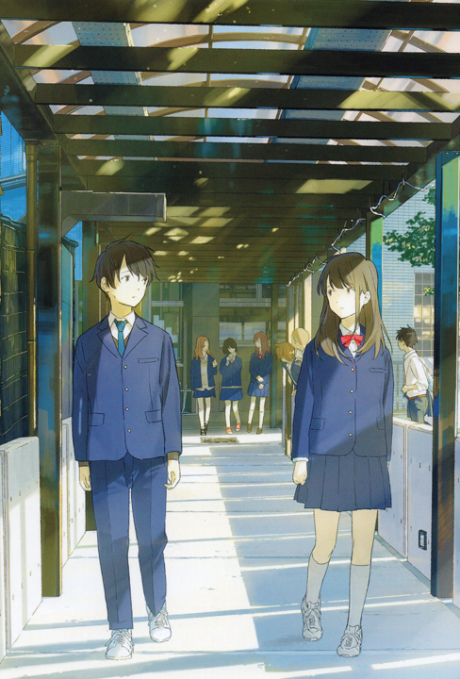
A compact relationship story that makes small decisions consequential.
The appeal is in small acts of communication: deciding what to say, misreading a pause, and working out how much uncertainty a relationship can hold. Its characters are young, and the show allows them to be inexperienced rather than unusually fluent miniature adults.
The 12-episode story provides a concluding view of the central relationship. Stay through the ending material. Choose it for gentleness and specificity; avoid it if you want an adult cast or frequent high-concept twists. Ordinary awkwardness supplies much of the tension.
Horimiya for progress without a long waiting game
Horimiya uses the gap between public impressions and private life to start its relationship. The attraction is seeing those impressions become less useful as the characters become closer. Couple dynamics are part of the story rather than solely a reward withheld until the last possible moment.
The 13-episode main adaptation moves quickly through the source and reaches an ending. The Missing Pieces is additional material from gaps in that adaptation, not simply a forward-moving second season. Watch the main series first if you want a straightforward introduction. The compression may disappoint someone who wants every friendship developed at equal length.
Look for changing relationships, not just another almost-confession.
Toradora! for emotional re-evaluation
The initial arrangement between its leads makes attraction look like a practical problem. The more interesting material appears when the characters’ stated plans fail to describe what they actually need. That shift gives the romantic arc momentum even when people are bad at naming their feelings.
The 25-episode main series resolves its central romance. Choose it for a larger emotional build and a substantial supporting cast. Physical-comedy aggression, family strain, and painful misunderstandings can make it a poor choice for someone specifically seeking a calm, considerate courtship.
Insomniacs After School for trust before polish
A shared difficulty creates room for two people to be less guarded. The attraction lies in the development of that space: an ordinary place becomes meaningful because someone else understands why you need it. The atmosphere matters as much as formal relationship milestones.
The 13-episode anime does not cover the complete manga. Choose it when visible closeness and forward movement are enough for now. If your requirement is the entire source ending, choose one of the more conclusive options above instead.
A Sign of Affection for deliberate communication
This college-centred romance places communication and differing experiences at the centre of attraction. The lead’s deafness matters to how encounters unfold, rather than acting solely as a mystery for another character to solve. It offers a different life stage from school romances.
The first season’s 12 episodes are an opening adaptation, not a promise of total narrative completion. Choose it for a relationship willing to move forward. Its idealised romantic presentation may be a mismatch if you prefer a more abrasive or sceptical treatment of intimacy.
When closure matters most
Choose Tsukigakirei for the shortest concluded story here, or Toradora! for a longer emotional build. If you are open to an incomplete adaptation, the other entries provide different kinds of progress. For a broader selection of finished narratives, visit completed anime with endings.
Sources and review
Factual references for this guide are listed below. Recommendation comparisons are Fantera’s editorial interpretation. See how we research and review articles.
- Tsukigakirei: official story index
- AniList catalogue reference: Tsukigakirei
- AniList catalogue reference: Horimiya
- AniList catalogue reference: Horimiya: The Missing Pieces
- AniList catalogue reference: Toradora!
- AniList catalogue reference: Insomniacs After School
- AniList catalogue reference: A Sign of Affection
Published . Reviewed .